
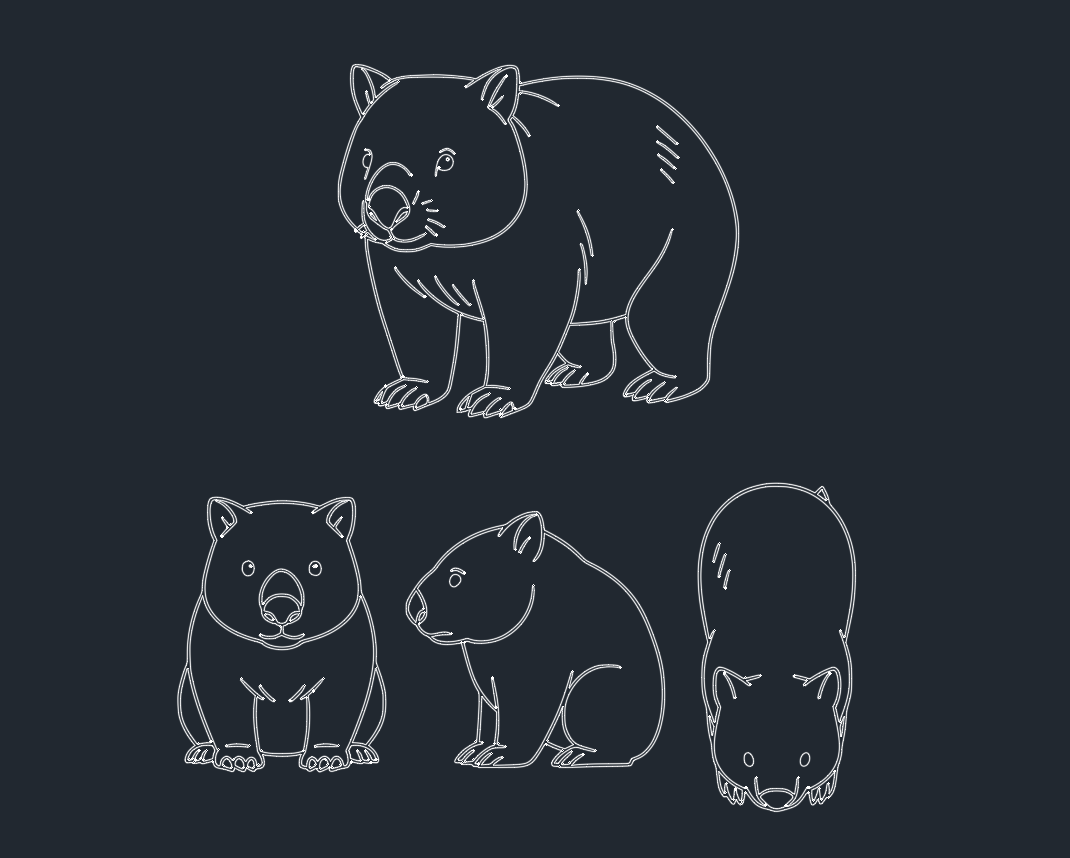
Introduction to the Wombat in CAD Design
The wombat, a robust marsupial native to Australia, is increasingly relevant in engineering, architectural, and CAD design contexts. As sustainability and biodiversity become central to planning and development, accurate digital representations of fauna like the wombat are essential. Integrating wombat DWG blocks into AutoCAD projects ensures compliance with environmental regulations and enhances project presentations.
Importance of Wombat DWG Blocks for Engineers and Architects
Biodiversity and Environmental Compliance
Modern infrastructure projects often require environmental assessments. Including wombat DWG blocks in site plans can help identify habitats and plan for wildlife corridors. This is particularly crucial in regions where wombats are protected or their burrowing activities may impact construction. Accurate representation allows engineers and architects to demonstrate compliance with local biodiversity guidelines.
Enhanced Visualization
Using wombat CAD blocks in landscape and urban planning improves visualization. Architects can display the impact of development on local wildlife, while engineers can plan around known wombat habitats. These blocks can be scaled, rotated, and annotated within the AutoCAD environment, making them versatile assets in your DWG library.
Features of Quality Wombat DWG Files
When selecting a wombat DWG file for your project, consider the following technical features:
– High-Resolution Geometry: Precise outlines of the wombat ensure realistic representation without unnecessarily increasing file size.
– Layer Organization: Layers for body, features, and annotations facilitate easy editing and integration with other site plans.
– Compatibility: Ensure the DWG block is compatible with your version of AutoCAD or other CAD software.
– Scalability: The block should be vector-based for seamless scaling in various drawing contexts.
How to Use a Wombat CAD Block
Inserting the Wombat DWG in AutoCAD
1. Download the wombat DWG file from a reputable CAD library.
2. Open your site or landscape drawing in AutoCAD.
3. Use the INSERT command to place the wombat block in the desired location.
4. Scale and Rotate the block as needed to match real-world proportions.
5. Annotate the block to indicate habitat areas or wildlife corridors.
Applications in Engineering and Architecture
– Wildlife Impact Assessments: Clearly mark wombat habitats in civil engineering site plans.
– Landscape Architecture: Integrate wombat blocks into park designs to showcase native fauna.
– Educational Projects: Use wombat DWG files in museum exhibit layouts or environmental education materials.
Benefits of Adding Wombat CAD Files to Your DWG Library
Improved Project Documentation
A comprehensive DWG library, including wombat CAD blocks, streamlines the documentation process. Engineers and architects can quickly access and deploy accurate wildlife representations, improving efficiency and consistency across projects.
Competitive Advantage
Demonstrating attention to environmental detail, such as including wombat DWG blocks, can set your firm apart. Clients and regulatory bodies appreciate thorough, visually clear project documentation that considers local wildlife.
Collaboration and Sharing
Standardized wombat DWG files enable seamless collaboration between multidisciplinary teams. Whether working with ecologists, landscape architects, or civil engineers, a shared CAD standard ensures accuracy and efficiency.
Where to Find Quality Wombat DWG Files
Many reputable DWG library websites offer wombat CAD blocks for download. Look for libraries that:
– Provide detailed previews of the wombat block.
– Offer files in multiple AutoCAD versions.
– Ensure blocks are free of unnecessary layers or non-standard elements.
Some popular sources include AutoCAD-specific repositories, architectural CAD libraries, and specialized wildlife DWG databases.
Conclusion
The integration of wombat DWG blocks in AutoCAD projects is more than a technical detail—it’s a best practice for environmental compliance, visualization, and stakeholder communication. By selecting high-quality wombat CAD files and maintaining an organized DWG library, engineers, architects, and CAD designers can enhance their workflow and deliver projects that respect both technical and ecological requirements.
Leave a Reply
You must be logged in to post a comment.