
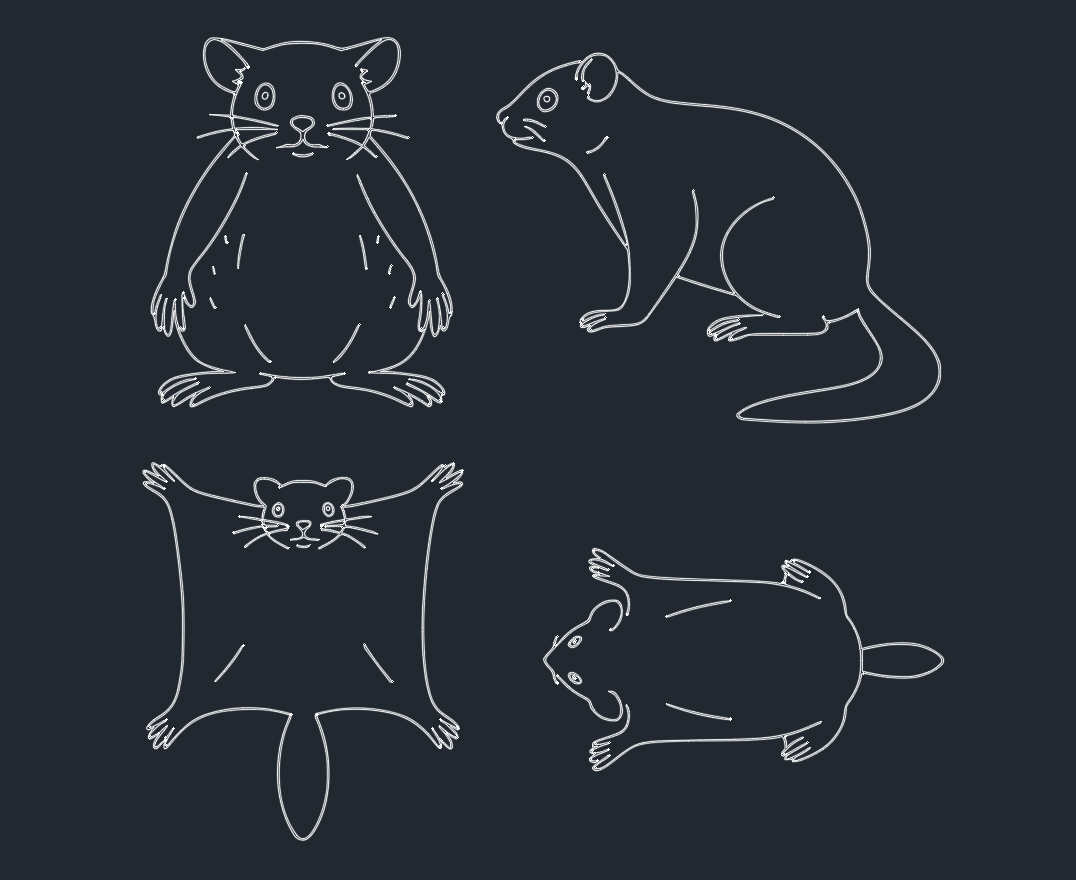
Introduction to Flying Squirrel in CAD Design
The term flying squirrel is commonly used in architecture, engineering, and design to refer to unique structural elements or features that mimic the shape or movement of a flying squirrel. In the world of CAD (Computer-Aided Design) and DWG (Drawing) libraries, flying squirrel components often denote curved or gliding structural supports, organic design motifs, or even mechanical assemblies inspired by the animal’s aerodynamics. This article explores the technical aspects, applications, and benefits of integrating flying squirrel-inspired elements into your AutoCAD projects.
Understanding the Flying Squirrel Concept
Biological Inspiration
The flying squirrel is a small mammal known for its ability to glide between trees using a membrane called the patagium. This natural gliding mechanism has inspired biomimetic design in architecture and engineering. The flying squirrel’s body structure and movement patterns are frequently referenced in CAD libraries to develop aerodynamic, lightweight, and visually dynamic components.
Flying Squirrel in AutoCAD and DWG Libraries
In AutoCAD and DWG libraries, the flying squirrel keyword often tags blocks, symbols, or families that have curved, wing-like extensions. These components are especially useful in:
– Organic roof structures
– Canopy designs
– Bridge supports
– Mechanical linkages
By leveraging flying squirrel blocks, designers can save time in drafting and ensure consistency throughout complex projects.
Applications of Flying Squirrel Design Elements
Architectural Structures
Architects use flying squirrel-inspired DWG blocks to create sweeping, organic forms in building facades and canopies. These elements not only enhance aesthetics but also improve structural efficiency by distributing loads more evenly—much like the gliding action of a flying squirrel.
Engineering Assemblies
In mechanical and civil engineering, flying squirrel components are integrated into truss systems, suspension bridges, and aerodynamic vehicle bodies. Their unique geometry allows for reduced wind resistance and optimized material usage, which is critical for cost-effective and sustainable design.
Interior and Industrial Design
For interior design and industrial applications, flying squirrel motifs add a touch of biomimicry and innovation. CAD libraries may feature flying squirrel handles, fixtures, or decorative panels that mimic the animal’s gliding wings, contributing to both function and form.
Technical Benefits of Flying Squirrel CAD Blocks
Enhanced Workflow Efficiency
By using pre-drawn flying squirrel DWG blocks, CAD designers can accelerate the design process. These blocks are typically parametric, allowing for easy resizing and customization without redrawing complex curves or surfaces.
Consistency and Accuracy
Standardized flying squirrel blocks ensure that all design elements are dimensionally accurate and consistent across multiple drawings. This is especially important for large-scale projects where precision is crucial.
Improved Visualization
Flying squirrel elements in 2D provide clients and stakeholders with a clear understanding of the intended design. The organic forms are visually striking, helping to communicate the project’s unique features effectively.
Best Practices for Integrating Flying Squirrel Elements in AutoCAD
1. Utilize Trusted DWG Libraries: Always source flying squirrel CAD blocks from reputable DWG libraries to ensure quality and compatibility with your version of AutoCAD.
2. Adapt to Project Requirements: Customize flying squirrel elements to meet specific load, span, or aesthetic requirements. Use parametric features to adjust dimensions as needed.
3. Maintain Layer Organization: Assign flying squirrel components to dedicated layers for better drawing management and easier revisions.
4. Optimize for Performance: Use lightweight flying squirrel blocks to reduce file size and maintain smooth performance in large CAD assemblies.
Conclusion
Incorporating flying squirrel elements into your AutoCAD and DWG projects offers a blend of technical innovation and aesthetic appeal. Whether you are designing an avant-garde building facade, an efficient bridge structure, or an industrial product, flying squirrel-inspired CAD blocks provide the flexibility and performance needed for modern engineering and architectural challenges. Explore specialized DWG libraries to find the perfect flying squirrel components for your next project and streamline your design workflow today.
Leave a Reply
You must be logged in to post a comment.